

US
°C




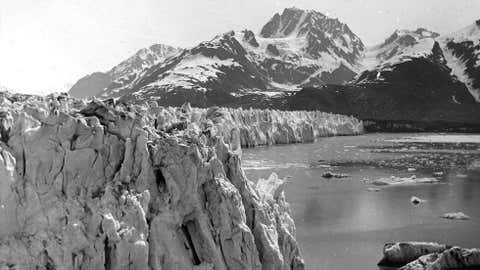
For decades, scientists have sought to solve the puzzle of why the Earth cooled drastically centuries ago.Researchers now say massive glacial flooding into the western Arctic some 13,000 years ago led to a cold snap for 200 years.
Massive glacial flooding into the western Arctic some 13,000 years ago led to acold snap for 200 years, a new study says.
For decades, scientists have sought to solve the puzzle of why the Earth cooled so drastically centuries ago. Now,researchers from Scripps Institute of Oceanographyat the University of California San Diego andWoods Hole Oceanographic Institution (WHOI) saythey believe they have solved the mystery.
The scientists in astudy published this week inNature Geoscience say the cooling, which becameknown as the "Younger Dryas," resulted when after anice age.
is one of the most well-known examples of abrupt change in climate, according to the National Oceanic and Atmospheric Administration.
The 2,000 years of warming millennia ago resulted in massive freshwater flooding from glaciers into the Arctic Ocean, which then flowed into the Atlantic Ocean. The abrupt change in temperature slowed circulation known as the ‘‘Atlantic meridional overturning circulation,or AMOC), whichultimately led to plunging temperatures in Europe and North America.
The researchers came to their conclusions by analyzing sediment cores collected from alongCanada's Mackenzie River. The sediment contained the fossils of microscopic organisms known as foraminifera.
Preserved within the shells of the foraminiferawere with a ratioconsistent with a large incursion of glacially derived freshwater, according to a press release.
“The signature of oxygen isotopes recorded in foraminifera shells preserved in the sediment allowed us to fingerprint the source of the glacial lake discharge down the Mackenzie River 13,000 years ago,” said Neal Driscoll, a geologist at Scripps and co-author of the National Science Foundation-funded study. “Radiocarbon dating on the shells provided the age constraints. How exciting when the pieces of a more than 100-year puzzle come together."
(MORE:)
The scientists noted that the Younger Dryas lasted only 200 years, which was really just a "short blip in a warming period that has lasted 20,000 years." For Driscoll and his colleagues, however, it is an "importantexample of how feedbacks affect the climate system."
"Events like this are really important, and we have to understand them better," said Lloyd Keigwin of WHOI. "In the long run, I think the findings from this paper will stimulate more research on how much fresh water is really necessary to cause a change in the system and weakening of the AMOC. It certainly calls further attention to the warming we're seeing in the Arctic todayand the accelerated melting of Greenland ice."







 zpostcode
 Recruit
 weather
 mreligion
 Yellowpages
 sport
sport constellation
 shopping
 name
name game
game directory
 literature
 Word
Word tour
tour furnish
 Lottery
 tftnews
 lyrics
 News
News digital
 car
car dir
dir Edu
Edu Finance


