

US
°C




A look at climate trends indicates that conditions on Earth have changed dramatically over the past century.The coming century will bring even more changes to our planet, scientists say.
By now it's no secret that Earth is getting warmer.
And it's not just anecdotal evidence that says so.
Decades of satellite images and scientific data from the nation's most respected unversities, research institutes and government agencies show that human-causedclimate change is at an alarming rate. Organizations including the United Nations, the National Academy of Sciences, NASA, the National Oceanic and Atmospheric Administration and the American Meteorological Society are among the many that agree that human activities are the primary cause of rising temperatures over the past 100 years.
(MORE: America's Most Endangered Rivers)
From rising sea levels to retreating glaciers to coral bleaching to stronger hurricanes, heat waves and drought, global warming is affecting every corner of our planet.
While scientists say Earth has experienced cycles of warming and cooling over the ages, the significant warming trend we are now in is nothing like those of the past.
Ancient collected fromtree rings, ocean sediment, coral reefsand layers of sedimentary rocks indicates carbon dioxide from human activity is increasing more than 250 times faster than it did from natural sources after the last Ice Age, and current warming is occurring about , according to NASA.
Here are nine climate trends that show that the planet is in trouble:
Global sea levelsrose between over the last 140 years, according to NASA.
That might not seem like much, but the rate of sea level rise over the past two decades is nearly double that of the entire previous century.
And that's just the beginning.
Scientists at NOAA predict that global sea level is very likely to rise at least above 2000 levels by 2100, even on a low-emissions pathway.
Sea level rise is driven by the melting of glaciers and ice sheets, as well as ocean water that expands as it warms.
With higher sea levels comes more frequent flooding. NOAA estimates that high tide flooding not associated with a major weather event - also known as nuisance flooding - is from 300% to 900% more frequent in many U.S. coastal communities than it was just 50 years ago.
Thanks to an increase in carbon dioxide, along with other human-made emissions spewed into the atmosphere, Earth's average surface temperature has risen about since the late 19th century.
"Most of the warming occurred in the past 40 years, with the seven most recent years being ," notes NASA. "The years 2016 and 2020 are tied for the warmest year on record."
The Intergovernmental Panel on Climate Change, which includes more than 1,300 scientists from the United States and around the world, predicts a of 2.5 to 10 degrees Fahrenheit over the next 100 years.
Earth's oceans are a key indicator of global warming because they absorb more than of the increased atmospheric heat associated with greenhouse gas emissions caused by human activity.
According to NASA, the top 328 feetof theoceans' surface has warmed Fahrenheit since 1969.
The impact of warming oceans is wide-ranging. From to extreme weather, scientists say the impacts of warming oceans will be felt across the globe as the years roll on.
Data from NASA's shows Greenland lost an average of about 275 billion tons of ice per year over the past two decades, while Antarctica lost about 150 billion tons per year.
Between is due to glacier ice melt, according to the World Glacier Monitoring Service.
Recent years have been marked by numerous weather extremes, including record-breaking wildfires, hurricanes and heat waves. Experts say these aren't anomalies - extreme weather events are becoming and we're likely to see more deadly, destructive and intense years ahead.
From 1900 to 1980, for example, a was typically set every 13.5 years. Since 1981, a new record's been set every three years.
One outcome of global warming and rising sea surface temperatures is changing patterns of precipitation and storm events.
Much of the U.S. west is in extreme drought made worse by changing weather patterns that also help fuel wildfires.
Warmer water is a key ingredient for hurricanes, and recent research has linked climate change to storms that are
According to NOAA, measurements taken from weather stations are showing due to the amount of water vapor in the air. This makes the air feel stickier when it's hot, and forces air conditioners to work harder.
More importantly, it's harder for the human body to keep its cool. Heat is the in the nation. The U.S. Centers for Disease Control and Prevention says an average of 702 people from heat-related causes each year and more than 9.200 people are hospitalized.
Some 67,500 emergency room visits a year are connected to heat.
Satellite data shows that the amount of spring snow cover in the Northern Hemisphere has decreased over the past five decades and the snow is melting earlier, according to NASA.
The maximum snowpack at more than 90% of the measurement stations in the western U.S. was this year, according to the National Snow and Ice Data Center.
Last year, late January snow cover in the lower 48 states was less than it had been at that time of year in nearly two decades.
While snowfall later in the year can change the overall averages, the long-term trend is clear.
Between 1955 and 2016, the depth of snow on the ground, or snowpack, in early spring in the western United Statesby more than 90%, while the "average portion of North America covered by snow between 1972 and 2015 decreased at a rate of about 3,300 square miles per year," according to the IPCC.
By 2100, snow cover in the Northern Hemisphere is expected to decrease by about15%, producing shorter snow seasons and a decreased snowpack in many regions. In northern latitudes, the permafrost is expected to continue to thaw.
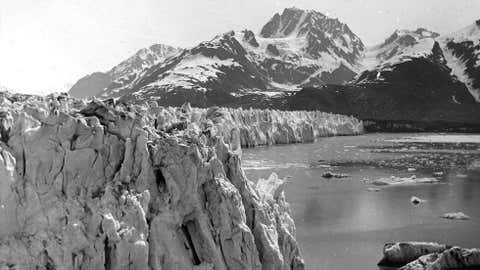
Because glaciers are so sensitive to temperature fluctuations, scientists say glaciersprovide about the effects of global warming, according to the National Snow and Ice Data Center.
According to the EPA's climate change indicators, glaciers in the United States and around the world have generally shrunk since the 1960s. The rate at which glaciers are melting has accelerated over the last decade.
According to NOAA,the acidity of surface ocean waters has increased by about since the beginning of the Industrial Revolution. Acidification occurs as human-produced carbon dioxide is absorbed by the oceans.
"Estimates of future carbon dioxide levels, based on business as usual emission scenarios, indicate that by the end of this century the surface waters of the ocean could be nearly 150% more acidic, resulting in a pH that the oceans haven’t experienced for more than 20 million years," .
Acidification of oceans imperils marine wildlife, particularly shellfish, which impacts the entire marine food chain, including humans. The reality of a world without seafood, particularly in areas that rely on the consumption of fish, is difficult to contemplate.
The Weather Company’s primary journalistic mission is to report on breaking weather news, the environment and the importance of science to our lives. This story does not necessarily represent the position of our parent company, .







 zpostcode
 Recruit
 weather
 mreligion
 Yellowpages
 sport
sport constellation
 shopping
 name
name game
game directory
 literature
 Word
Word tour
tour furnish
 Lottery
 tftnews
 lyrics
 News
News digital
 car
car dir
dir Edu
Edu Finance


